The micro-cap IPO window did not close by accident. It did not shut because investors suddenly lost interest in growth companies, nor because capital vanished from the system. It narrowed because structural flexibility was pushed too far, for too long, and in ways that ultimately forced a response.
Between 2021 and 2025, U.S. IPO activity moved through distinct but related phases, with a meaningful share concentrated in small and micro-cap offerings. The early part of that period was marked by abundant liquidity and elevated risk appetite. Capital was readily available, speculative enthusiasm was high, and smaller issuers found receptive audiences. As broader market conditions tightened — rising rates, declining valuations, and more selective institutional capital — access became more constrained. But micro-cap deal activity did not disappear. Instead, structures became more complex, more aggressive, and in some cases more dependent on volatility itself to sustain capital formation.
Many of these offerings raised under $50 million. Some were far smaller. On the surface, the activity suggested that emerging companies still had viable pathways into the public markets even as larger IPO windows fluctuated. It appeared to represent resilience at the smallest tier of the exchange ecosystem.
But beneath that surface, structural vulnerabilities were becoming increasingly visible.
Low public float, thin liquidity, layered financing instruments, and capital structures highly sensitive to short-term trading dynamics created an environment where price spikes were common and reversals were swift. In some instances, the very features that made entry possible also amplified instability after listing. Retail investors frequently entered during upward momentum, only to encounter dilution cycles and sharp corrections once financing mechanisms were triggered.
By 2024 and into 2025, the pattern was difficult to ignore. When volatility-dependent structures repeat across multiple issuers and produce similar outcomes, exchanges and regulators inevitably respond.
To understand why the window narrowed, it is necessary to examine how certain gatekeepers operated during this multi-year cycle.
Why This Needs to Be Said
Much of this is acknowledged privately among market professionals but rarely articulated openly. The tightening of the micro-cap IPO market did not occur in isolation. It followed several years in which structural flexibility was tested — and in some cases stretched — to the outer edge of what the public markets would absorb.
When deal structures prioritize maximum short-term extraction over long-term durability, the consequences extend well beyond any single transaction. The ripple effects are systemic.
Legitimate small-cap companies that genuinely seek to use public markets for growth now face higher barriers because flexibility that once existed was leaned on too aggressively. Retail investors who want exposure to early-stage stories have grown more skeptical — understandably — after repeated volatility cycles that ended in heavy dilution and sharp declines. And securities attorneys who operate ethically, structure balanced offerings, and prioritize sustainable capital formation now work within a framework shaped by reforms triggered by more aggressive actors.
This is not an indictment of an entire profession. There are capable, principled attorneys who protect issuers and investors alike. But when a segment of the market exploits structural weaknesses — whether through excessively dilutive terms, volatility-sensitive financing, or capital raises timed around artificial momentum — the regulatory response applies broadly. It does not isolate the careful from the careless.
Exploiting the Structure of Micro-Cap Markets
Securities attorneys and placement professionals play a central role in shaping capital formation. They structure offerings, negotiate financing terms, design warrant packages, and guide issuers through public listings. When executed responsibly, this work strengthens market integrity and protects both issuers and investors.
During the 2021–2025 cycle, however, some market participants leaned heavily into vulnerabilities inherent in the smallest tier of the public markets.
Deeply discounted offerings layered onto thin floats. Highly dilutive convertible instruments structured to benefit from volatility. Heavy warrant coverage tied to elevated trading windows. Capital raises executed during price surges rather than tied to operational milestones.
This did not describe every firm or every transaction. Many advisors insist on durable, balanced structures. But in competitive environments, issuers under financial pressure gravitate toward the most permissive structure available. If one advisor is willing to push further — offering fewer constraints and more aggressive economics — the incentives become self-reinforcing.
Businesses generally pursue the structure that raises the most capital under the least restrictive terms. When thin float, retail momentum, and volatility can be leveraged to maximize proceeds, the temptation is obvious.
The outcomes, over time, became predictable.
The Volatility–Offering Cycle
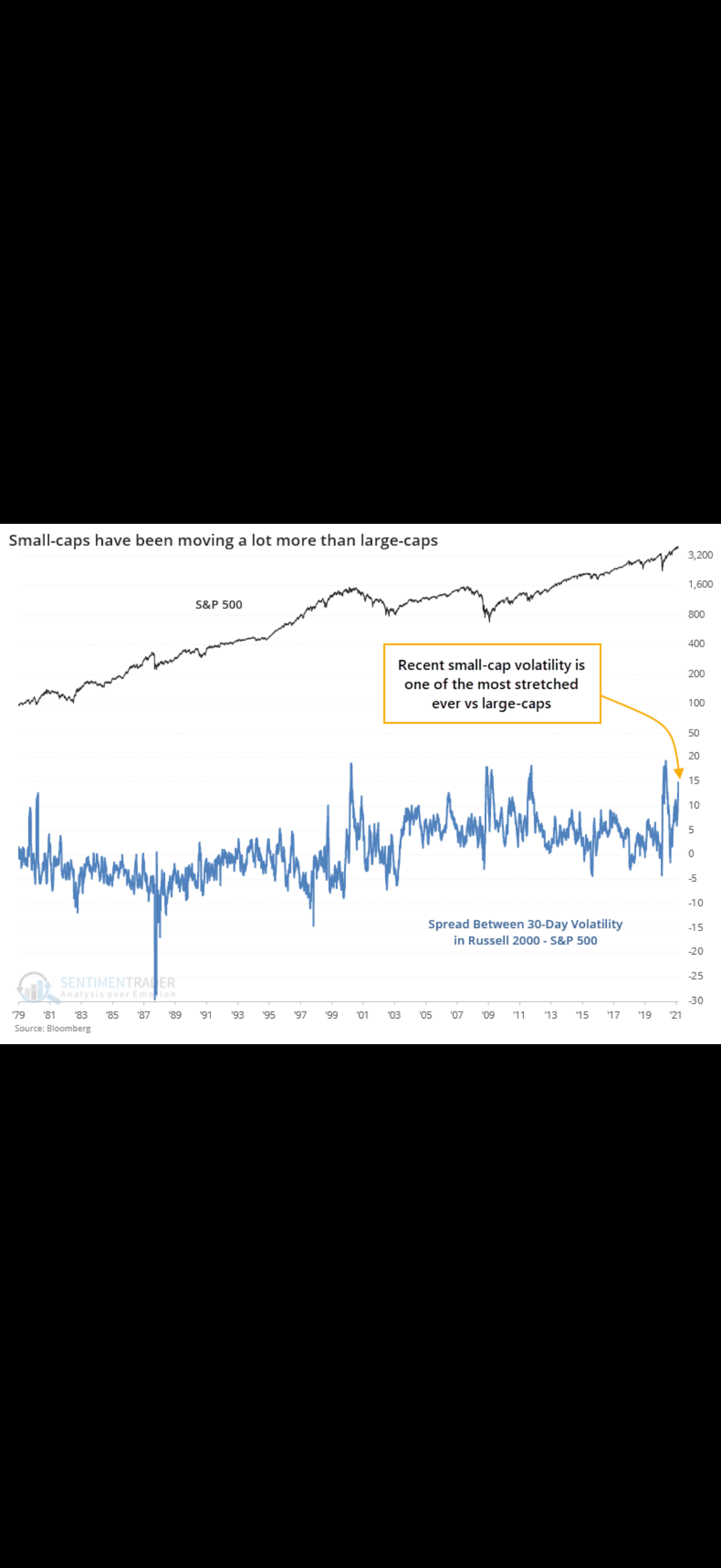
In a low-float environment, even modest buying pressure can send a stock materially higher. Add promotional energy — optimistic press releases, speculative commentary, retail enthusiasm — and price discovery can detach from fundamentals with surprising speed.
A familiar sequence often followed: a sharp upward move; an offering or capital raise executed near elevated levels; warrant exercises or conversions; significant dilution; and then a rapid reversal as new supply overwhelmed demand.
Retail investors frequently entered during the surge, believing the move reflected genuine operational progress or transformative developments. In many cases, disclosures were technically compliant but structurally incomplete in terms of explaining how financing mechanics would affect shareholders during inevitable volatility.
When the reversal came — as thinly traded micro-caps often experience — retail participants were left holding losses amplified by capital structures designed to reset, reprice, or convert during weakness.
The issue was not geography. It was not limited to foreign issuers. U.S.-based micro-caps have exhibited similar cycles across decades. The common denominator was structure — and how that structure was used.
PIPE Financing: When a Tool Becomes a Weapon
Private Investment in Public Equity (PIPE) financings were originally intended as efficient capital formation tools. In principle, they allow public companies — particularly smaller issuers — to raise capital quickly without undertaking a full public offering. When structured responsibly, PIPEs can provide flexibility to companies navigating early growth phases.
But during the multi-year micro-cap cycle, these instruments were at times engineered in ways that diverged sharply from that purpose.
Deep discounts, floating-rate convertibles, reset provisions tied to future trading prices, and heavy warrant coverage can create incentives fundamentally misaligned with long-term shareholders. In thin-float securities, these features can produce a self-reinforcing loop: volatility attracts financing; financing introduces dilution; dilution pressures price; conversion formulas reset lower; and the cycle continues.
The structure becomes volatility-dependent.
This is not a blanket condemnation of PIPE transactions. Many are negotiated fairly and disclosed transparently. The concern arises when financing instruments are repeatedly designed in ways that appear to benefit from predictable dilution and instability — particularly in companies with limited operating scale.
Public markets tolerate dilution when it funds growth. They do not function well when financing mechanics depend on volatility and repeated resets to generate return.
When sophisticated professionals structure or facilitate such transactions repeatedly — especially where patterns become visible across multiple issuers — fines alone are unlikely to alter behavior. Monetary settlements absorbed as a cost of doing business do not deter systemic exploitation.
In cases involving intentional misrepresentation, undisclosed conflicts, coordinated dilution cycles, or market manipulation, consequences should extend beyond financial penalties. Industry bars, professional discipline, and — where evidence supports it — prosecution are not excessive measures. They are necessary protections.
Gatekeepers exist because markets rely on professionals to prevent predictable harm. When they instead enable it, meaningful accountability is essential.
Why Exchanges Responded
Exchanges did not tighten standards based on theory. They responded to observable fragility accumulated over several years.
Listing thresholds increased. Requirements surrounding unrestricted publicly held shares became more demanding. Continued listing standards — including minimum bid price and market value thresholds — were enforced more rigorously. Exchanges expanded qualitative discretion where structural concerns suggested heightened manipulation risk.
The entry threshold rose. The survival threshold rose. Ultra-thin, volatility-dependent pathways became significantly more difficult to execute.
From a systemic perspective, the shift is understandable. Markets cannot function if confidence erodes at their foundation. But the tightening did not isolate only aggressive actors. It reshaped the environment for everyone operating within it.

The Collateral Consequences
When structural flexibility is exploited repeatedly, corrective responses are rarely surgical.
Legitimate small companies now face higher capital barriers. Responsible advisors operate in a more restrictive framework. Retail investors approach micro-cap growth stories with heightened skepticism. The ecosystem adjusts collectively.
That is the quiet cost of exploitation.
The Larger Lesson
Public markets are sustained not only by disclosure, but by structure. When companies are engineered in ways that rely on volatility to raise capital, when financing mechanics amplify dilution during price spikes, and when retail investors repeatedly absorb asymmetric downside, confidence deteriorates.
Micro-cap IPOs still exist. Access has not disappeared. But it is no longer as permissive as it once was.
That shift was not random. It was the product of incentives pushed too far over a multi-year cycle — and structures leaned on too heavily.
Integrity sustains access.
Exploitation, eventually, closes the window for everyone.
Media Contact:

Disclaimer: The views, suggestions, and opinions expressed here are the sole responsibility of the experts. No Boston New Times journalist was involved in the writing and production of this article.
